Tuesday, November 25, 2014
ENG 315 Business Report Presentation Video
This presentation identifies effective uses of social media to express a company's respective identity online. It provides social media strategies for improving communication programs, online top social media channels, and illustrates current trends and best practices.

Thursday, November 20, 2014
Week 4, Discussion 2: Top 5 career fields
 |
| Image Credit: http://usaa.com |
Customer service
One of the fastest growing occupations in San Antonio involves customer service. People who work in customer service jobs can work in a variety of businesses as the liaison between an organization and customers. Some also have dual roles in selling products for companies at retail stores. I've seen many customer service representatives at brick-and-mortar storefronts like T-Mobile, Verizon, and Ashley's Furniture. According to the Bureau of Labor Statistics (2013), there are more than 26,000 customer service representatives who make about $13.78 hourly, which adds up to about $28,660 annually.
 |
| Image Credit: http;//www.udc.edu |
Another trending career field is human resources in San Antonio. Human resources is a diverse industry of professionals who work with managers and employees to resolve labor-related issues. They are also called upon to resolve conflicts, and counsel company members on benefits and competitive compensation. The Bureau of Labor Statistics (2013) states that human resources specialists and assistants make about $18 hourly, which adds up to $37,390 annually.
 |
| Image Credit: http://wildrockpr.com |
One of my preferred career fields is public relations. Public relations specialists can be hired as a public affairs specialist for the military and government or as a public information officer for government organizations. they also can fill marketing and community relations positions at commercial organizations. According to the Bureau of Labor Statistics (2013), public relations specialists in san Antonio make about $23 hourly, which adds up to $47,790 annually.
 |
| Image Credit: http://palmeradagency.com |
Working in the advertising and marketing industry opens up many possibilities for using the skills I learned as part of my Communications Studies program. Advertising involves creating marketing campaigns using online, print, and television advertising strategies to reach out to potential customers with consumer products. According to the Bureau of Labor Statistics (2013), advertising supervisors can make between $21 and $32 hourly or between $45,000 and $66,000 annually.
 |
| Image Credit: http://idratherbewriting.com |
Another one of my favorite career fields in the communications industry is technical writing. Technical writings draft communication products that are used to explain concepts involving computer hardware and software, engineering, chemistry, aeronautics, and robotics. It requires a communication specialist to learn not only the fundamentals of writing, but also incorporate the ability to learn and relay new information about technical innovations. According to the Bureau of labor Statistics (2013), technical writers earn about $32 hourly, which adds up to about $67,900 annually.
Of all the career fields I described above, my favorite to have a long-term career in would be public relations. I've worked in public affairs for the Air Force for 17 years, and I like how the industry has evolved to include more online communication that also involves social media. While I like writing news stories and features, I also like creating social media plans and strategies to engage with the general public about the Air Force.
References
Occupational Employment and Wages in San Antonio–New Braunfels, May 2013 : Southwest Information Office : U.S. Bureau of Labor Statistics. (2013). Retrieved from http://www.bls.gov/regions/southwest/news-release/occupationalemploymentandwages_sanantonio.htm
Monday, November 17, 2014
Week 3 assignment: Delivering bad news
 |
| Image Credit: http://georgetownexec.com |
 |
| Image Credit: http://conflictres.acu.edu/ |
When the meeting occurs, the supervisor will begin the meeting, and consider their non-verbal communication techniques like sitting up tall, looking at the person, but not staring, and speaking firmly and assertively to the employee about the issue at hand. Cahn and Abigail (2007) suggest they use their knowledge of the issue to anticipate how the employee will response. They should also verbalize what their personal views and concerns are to allow the employee to have a baseline for how to respond. Using “I-statements” are also beneficial to ensuring communication is clear, concise, and assertive enough to impact the employee’s demeanor so they are honest and forthcoming about their negative behavior.
The fourth stage of the Cahn and Abigail’s (2007) states that supervisors should have empathy for their subordinates, and take into account their beliefs and feelings regarding their work environment and personal behavior issues. The old adage, “Put yourself in their shoes,” applies to these confrontational situations because it reminds the supervisor to their about the situation from their employee’s perspective. It helps them formulate proposed recommendations for resolving the conflict at work too. The final stage is the most critical, according to Cahn and Abigail (2007) because both parties need to come together to agree on a mutually beneficial agreement that meets both the supervisor and employee’s goals for the meeting. The supervisor will need to ensure the agreement is accomplished in writing, which can be filed in the employee’s personnel record for use later if they are being considered for dismissal because of multiple infractions. Formal agreements can also be finalized using a mediator who can help both parties communicate their goals and concerns as well as the final written agreement to resolve the issue.
Lastly, the final step includes scheduling a timeline for both parties to come back to the table to see if the recommended solution worked and was implemented properly (Cahn and Abigail, 2007). Reviewing the employee’s performance and adherence to the written agreement will let the supervisor know if their resolution was beneficial for the company and the employee. The follow-up meeting can also be a forum for the supervisor and employee to request amendments to the agreement, which will help them sharpen the focus of their long-term goals.
In conclusion, communicating with employees who are displaying a confrontational behavior at work require supervisors to be assertive in addressing their inappropriate behavior to make them productive members of the organization’s team. Managers need to be proactive in anticipating the employee’s response, and use a six-step confrontation process to come to a mutual agreement to resolve the issue.
References
Cahn, D.D., & Abigail, R.A. (2007). Managing conflict through communication (4th ed.). Boston, MA: Pearson Education, Inc. ISBN: 978-0-205-68556-1
Thursday, November 13, 2014
Week 3 assignment: Overcoming cultural differences
 |
| Image Credit: http://www.slideshare.com |
Hahn (2005) suggests that people have an awareness of each person's individual space and be aware of their comfort zones in a business environment. He also added that employees should understand the organizations policies on legal and ethical behavior to ensure they are following the appropriate guidelines for how to treat people with language barriers and other cultural differences.
The most effective way to address cultural differences in the workplace is to be respectful, flexible, patient, and clear in communicating your needs. Try to empathize with their cultural challenges, and try to relate to their situation to find common ground to send and receive messages properly (Hahn, 2005).
 |
| Image Credit: http://www.saludtoday.com |
Having a clear understanding of cultural boundaries, and how to overcome them, lead to our organization having a judgement-free environment for employees to thrive and ultimately help the company achieve its mission and goals.
Reference
Hahn, M. (2005). Ten Commandments of Intercultural Communication. Retrieved from http://ezinearticles.com/?Ten-Commandments-of-Intercultural-Communication&id=120247
Monday, November 10, 2014
Week 2 assignment: Media technologies
 |
| Image Credit: http://www.hongkiat.com |
According to Barndt (2011), “Our social, political and management systems are becoming more sophisticated and dependent upon effective communication.” Media technologies have adapted to how people prefer to communicate with one another through different mediums like telephones, text messages, e-mail, and video conferencing. Organizations rely upon a wider variety of supports and relationships, and larger organizations enter into collaborative relationships requiring extensive communication through new mediums.
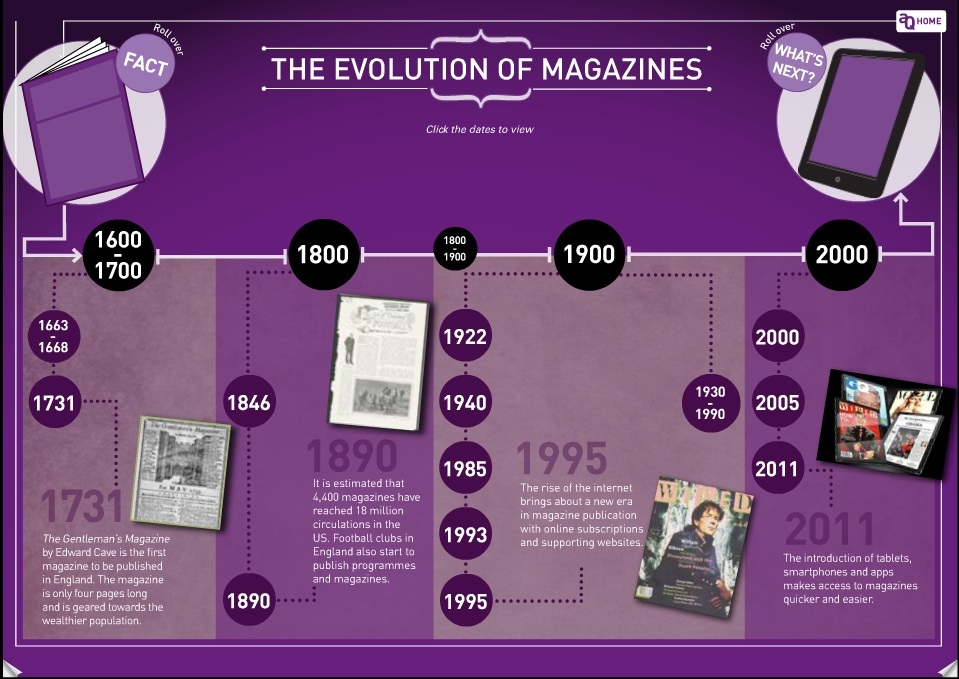
Traditional and modern media technologies have blended in several areas since the telecommunications revolution in the 1990s (Barndt). Media outlets were evolving because information was being shared through global networks at an exponential rate through the Internet. Web pages were initially very crude and didn’t include vibrant graphics or charts to assist people who are visual learners. Personal computers helped people access information in new ways, which made the television, radio, newspaper, and magazine industries adapt to stay relevant to mainstream users.
 |
| Image Credit: http://www.digitalartistdaily.com |
 |
| Image Credit: http://www.visualinformation.info |
Radio first appeared on ships in 1891 so they could communicate with land units, and reduce the feeling of isolation by crew members. The introduction of mobile radios was used to broadcast business communication between maritime, aviation, and land-based entities. In fact, companies like Marconi and Bell laboratories were creating car telephone systems from mobile radios in the 1920s. This technology eventually led to today’s cell phones and radio telephones used by the military in both World Wars. Radio’s main audiences vary based on the type of music or information they share on the air waves.
 |
| Image Credit: http://media-curse.cursecdn.com |
Early television audiences included family households who watched the evening news and other “prime time” programming. As television evolved, so did their target audiences. Cable television separated audiences by their respective interests to give them access to general programming, sports, movies, and even “reality” television. The Internet also emerged as a viable solution for cable television in the 1990s, and sites like the Internet Movie Database, or IMDb, helped people learn about cast members from their favorite television and cable series as well as motion pictures (Curtiss, 2011).
 |
| Image Credit: http://www.sequelgroup.co.uk |
 |
| Image Credit: https://m1.behance.net |
The Internet has opened up a variety of educational resources to help people share and collaborate on different concepts and ideas to increase their knowledge of different subjects. Capeless (2014) stated the Internet even helps children develop their knowledge base in constructive learning environment to help them grow as individuals. The Internet has also opened up other business opportunities for professionals to engage with one another in secure forums. Capeless (2014) suggests online users be courteous, kind, and respectful to people they communicate with on the Internet because people come from different regions and cultural backgrounds. Sharing information is encouraged, but Capeless (2014) suggests that people stay away from peer-to-peer networks where illegal audio and video content is being shared daily.
In conclusion, modern media technologies revolutionized how people communicate and receive information in the 21st century. Technologies like television, radio, newspapers, magazines, and the Internet have become integrated communication platforms for global audiences to share facts, experiences, and other business concepts in broad and innovative ways that have impact how people relate to one another and discuss personal and organizational issues. Lastly, these media technologies, along with other transformational innovations, continue to evolve as technology and communications bring people together from across the globe.
References
Capeless, D. (2014). Internet Safety & Appropriate Use of Communication Technologies. Retrieved from http://www.mass.gov/berkshireda/crime-awareness-and-prevention/internet-safety-and-appropriate-use-of-communication-technologies/internet-safety.htmlCurtis, A. (2011). A Brief History of Movies, TV and the Web. Retrieved from http://www2.uncp.edu/home/acurtis/Courses/ResourcesForCourses/Movies&Television.html
Barndt, M. (n.d.). The Telecommunications Revolution. Retrieved from https://pantherfile.uwm.edu/mbarndt/www/revolut.htm
Mass Media Course: Magazines, the Early History. (2013). Retrieved from http://www.cybercollege.com/frtv/mag1.htm
Stephens, M. (n.d.). History of Newspapers. Retrieved from http://www.nyu.edu/classes/stephens/Collier's%20page.htm
Monday, November 3, 2014
Week 1 assignment: Professional blogs
 |
| Image credit: http://www.ncwcfamily.org |
According to Deckers (2010), Google’s chief blogger, Karen Wickre, suggests the purpose of professional blogging is to give an organization a voice online, and provide their target audience a unique, inside look into the company’s products, values, and interests. It can also be used to show customers the production process for their product lines, and highlight the people who work behind-the-scenes to ensure each product is made with care and quality.
Getgood (2010) suggests that blog content should be organized into multiple categories like essays, reviews, expert commentaries, shopping, or news events. Designing a blog to match your audience’s is also essential to reaching the right audience. Finding professional templates or hiring a blog designer can increase your chance of having a successful blog (Getgood, 2010). There are a few best practices to consider to manage a professional blog properly. Developing an editorial calendar to organize and schedule blog posts and creating descriptive headlines that are optimized for search engines will give bloggers the best chance for success (Getgood, 2010).
In conclusion, this research paper analyzed modern professional blogs and discuss their purpose, design, content, and target audiences. It also outlined a few best practices for managing a successful blog, and how to integrate these tactics and strategies to create a business-oriented blog for a commercial organization.
References
Deckers, E. (2010). Corporate Blogging’s Chief Purpose from Google’s Chief Blogger - Professional Blog Service. Retrieved from http://problogservice.com/2010/08/03/corporate-bloggings-chief-purpose-from-googles-chief-blogger/
Getgood, S. (2010). Professional Blogging For Dummies Cheat Sheet - For Dummies. Retrieved from http://www.dummies.com/how-to/content/professional-blogging-for-dummies-cheat-sheet.html
Designing my blog theme
 |
| Image credit: http://uniquenetdesigns.com |
Blogger also included other advanced gadgets for adding a custom contact form and daily calendar to help blog visitors interact with the blogger and see their scheduled events. You can also integrate content from other websites like daily quotes, jokes, or related stories to help blog visitors learn more about subjects they are interested in. One of my favorite gadgets is including Windows Live Messenger and Facebook chat to the blog. These interactive features enhances the blog's usability and gives visitors outlets for giving direct feedback to bloggers.
It will be interesting to see how the design I chose comes together after I add content. Including graphics and other visual elements will also make the blog's overall theme more enticing to blog visitors. While this is definitely an educational tool for our capstone course, it will also be an opportunity to showcase our research papers to larger audiences and garner their feedback about our profession.
Subscribe to:
Posts (Atom)